
Dodge County Criminal Court Records
A Dodge County criminal court record is the case-level file kept after formal criminal charges are filed in court. It can include an indictment, accusation, arraignment entry, bond order, motions, hearing notices, plea, verdict, sentencing order, probation terms, restitution, dismissal, nolle prosequi, or appeal entry. The jail roster may show an arrest and charge grid first, but the criminal court record is the court's file for the prosecution and outcome.
Georgia's court hierarchy controls where criminal records sit. Superior Court is the general-jurisdiction trial court and handles felony criminal cases. Magistrate Court is important for warrants, first appearances, and preliminary criminal steps. Municipal courts may handle city traffic and ordinance matters. Juvenile Court records are restricted. Dodge County is in the Oconee Judicial Circuit, so Superior Court criminal case activity is local to Dodge County but linked to circuit judges, calendars, and case-search infrastructure.
The Georgia Felon Search image assigned for Dodge County criminal court records comes from the statewide criminal-history search source.
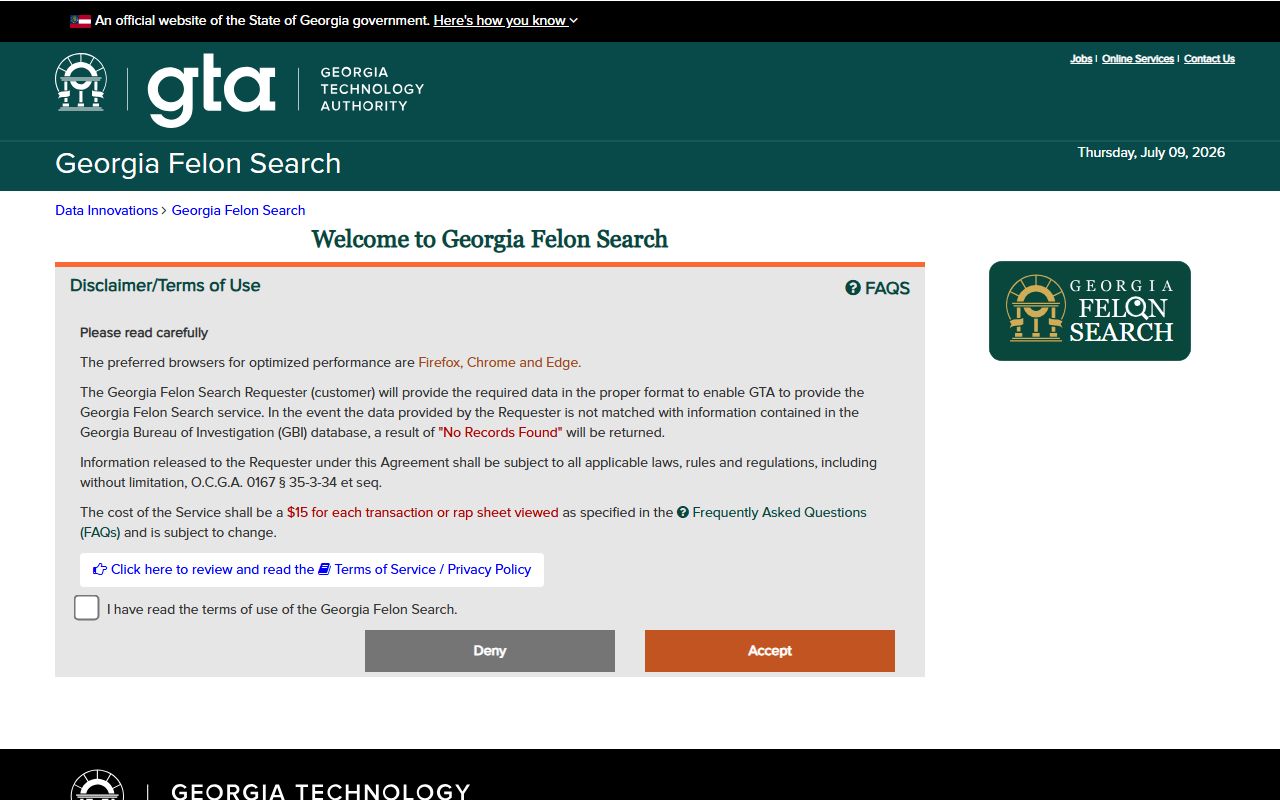
That state search is not the same as the local court case file, but it is part of the larger criminal-record access landscape.
Search Dodge County Criminal Court Records
The starting point for local criminal case records is the Dodge County Clerk of Superior Court. The Clerk site links to the Oconee Judicial Circuit case-search login, but public inspection did not expose no-login criminal search fields. For certified copies, older records, criminal files not found online, or questions about access, use the Clerk counter, phone, fax, or mail request channel.
- Identify whether the matter is a court case, a jail booking, a warrant event, or a statewide criminal-history search.
- Use the Clerk Case Search link to reach the Oconee Judicial Circuit login if case access is available.
- Search or request by defendant name, case number, court, case type, or filing date where those details are available.
- Read the docket for filed charges, plea, hearings, orders, disposition, and sentence.
- Request a certified copy from the Clerk of Superior Court if the record must be used for official proof.
For charge details that first appear after booking, the custody side is separate from the full case file. A closer look at the arrest-to-charge path belongs in the Dodge County arrest records and court charges material, while this criminal court records page stays focused on the filed court case and outcome.
Dodge County Criminal Case Flow
Criminal court records grow as the case moves. A charge may begin with law-enforcement custody records or a warrant. The prosecutor then decides what charges to file, whether by accusation, indictment, or another charging document. The docket then records hearings, motions, plea activity, trial settings, disposition, and sentence. Each step can change the record because charges may be amended, dismissed, reduced, or resolved by plea or verdict.
Case flow: Charges Filed › Arraignment › Pretrial / Motions › Plea or Trial › Disposition › Sentencing
| Stage | What Happens |
|---|---|
| Charges filed | The DA files an accusation or presents an indictment, and the court file reflects formal charges. |
| Arraignment | The defendant is advised of charges and enters a plea. |
| Pretrial and motions | Lawyers file requests, evidence issues are argued, and hearings may be set or continued. |
| Plea or trial | The case resolves by negotiated plea, bench trial, jury trial, dismissal, or other disposition. |
| Sentencing | The court enters jail, prison, probation, fines, costs, restitution, or other terms after conviction. |
Dodge County Criminal Record Fields
A Dodge County criminal court record may show both case-level and charge-level information. Public access can be limited by login, redaction, sealing, juvenile confidentiality, or the fact that a document image is held at the Clerk's office rather than posted online. No anonymous Oconee sample criminal case record was accessible in the research, so the field list below is an expected Georgia criminal court record inventory, not a promise that every public screen displays every item.
| Field | What It Shows |
|---|---|
| Case number | The local or circuit identifier for the criminal prosecution. |
| Defendant | The accused person, with protected identity data redacted when required. |
| Charges | Counts, statute references, descriptions, severity level, and amended or dismissed charge entries. |
| Plea | Guilty, not guilty, nolo, or other plea activity where entered. |
| Docket events | Arraignment, bond orders, motions, hearings, continuances, verdicts, judgments, and appeals. |
| Disposition | The outcome of the case or each count, including dismissal, nolle prosequi, acquittal, plea, or conviction. |
| Sentence | Confinement, probation, fines, restitution, court costs, or other terms ordered after conviction. |
Dodge County Charges vs Convictions
A criminal charge is not a conviction. A charge means the state has accused a person of an offense. A conviction means guilt was found or admitted by plea or verdict. Dodge County criminal court records can show charges that were amended, dropped, dismissed, nolle prossed, or ended in acquittal, so users should read the disposition and sentence rather than stopping at the charge list.
| Point | Charge | Conviction |
|---|---|---|
| Case stage | Accusation filed or presented. | Final finding or admission of guilt. |
| Record meaning | Shows what the state alleged. | Shows the charge was resolved as guilty. |
| Can change | May be amended, reduced, dismissed, or nolle prossed. | May lead to sentence, probation, fines, or appeal. |
| Best field to check | Charge count and statute. | Disposition and sentence. |
Dodge County Prosecution Roles
Dodge County is served by the Oconee Judicial Circuit District Attorney. The Prosecuting Attorneys' Council profile lists Timothy Vaughn as District Attorney with an Eastman mailing address, phone 478-374-3482, and fax 478-374-0227. The DA files accusations, presents indictments, negotiates pleas, dismisses or nolle prosses charges, handles victim-related court functions, and may participate in record-restriction decisions.
The PAC profile image assigned for Dodge County criminal court records documents the local prosecuting authority.

The prosecutor role is central because a jail charge becomes a court charge only when formal filing decisions move into the court record.
The Georgia Public Defender Council Dodge County page is the defense-side public source assigned for this page.
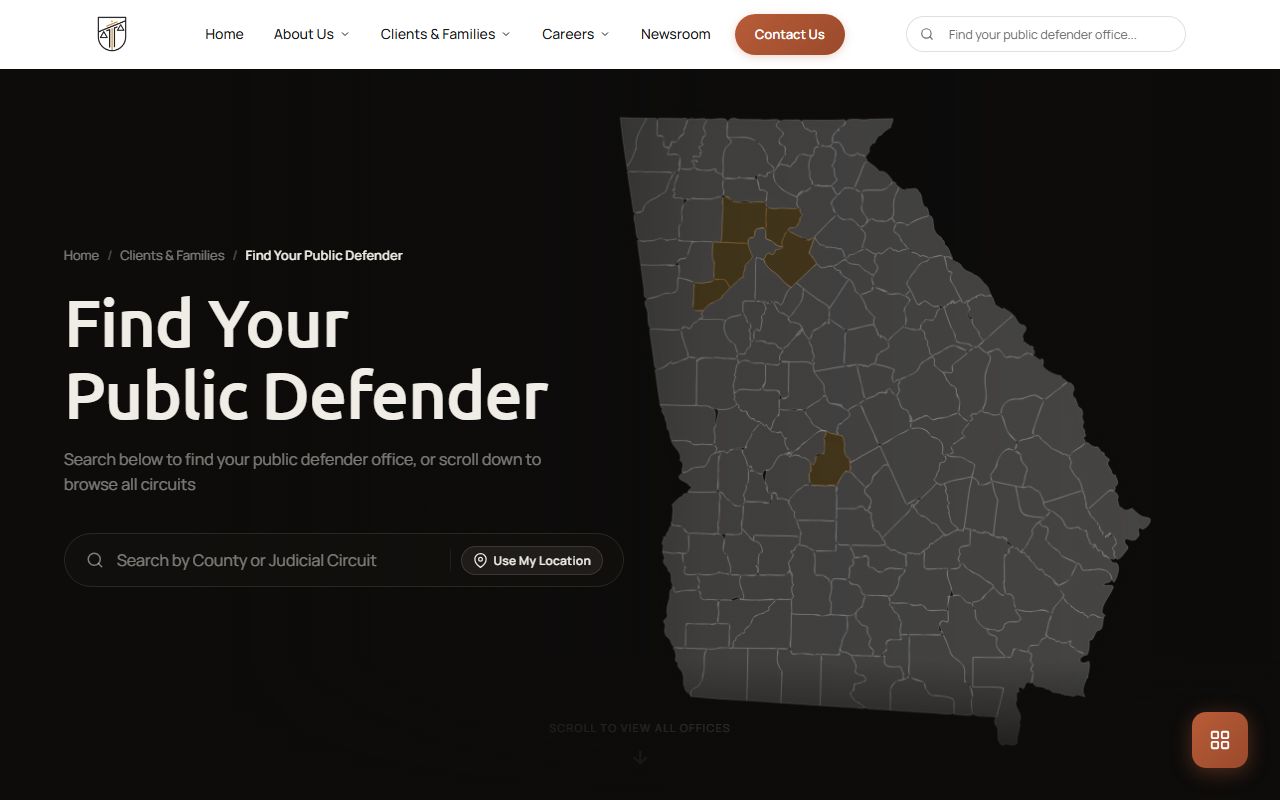
Public defender information helps explain why criminal court records may list appointed counsel or defense filings in the docket.
Sealed vs Expunged Criminal Records
Georgia criminal-record language often centers on record restriction rather than a broad promise of expungement. Eligible entries may be restricted under O.C.G.A. 35-3-37, and a court may seal specific files or withhold confidential information. A jail roster entry does not prove the final court disposition remains public forever, and a public court record does not mean every state criminal-history field is available to everyone.
| Point | Sealed Record | Expunged or Restricted Record |
|---|---|---|
| Public view | Hidden or limited by court order. | Limited in public criminal-history access when eligible; Georgia sources commonly use restriction language. |
| Who may still see it | Courts, law enforcement, or authorized parties may retain access. | Law-enforcement or court access may remain under Georgia law even when public access is restricted. |
| Common triggers | Juvenile, adoption, protected details, or case-specific sealing order. | Dismissal, nolle prosequi, acquittal, or other statutory eligibility. |
| Where to verify | Clerk of Superior Court or issuing court. | Clerk, prosecutor, and Georgia criminal-history systems. |
Access Dodge County Criminal Court Records
Public access to Dodge County criminal court records depends on the record type and status. Open Records Act principles apply to many agency records, but court case files are requested through the clerk of the court that maintains the file. For Superior Court criminal records, use the Clerk of Superior Court. For first appearance or warrant-related matters, Magistrate Court or the sheriff may also hold a related record. For statewide criminal-history name searches, Georgia Felon Search is a separate state tool, not a substitute for the full court file.
Key Statutes:
O.C.G.A. 50-18-70 et seq. describes Georgia's public-records access framework for agency records.
O.C.G.A. 35-3-37 governs eligible Georgia criminal-history restriction and should be verified before filing any request.
The GPDC Oconee Circuit service article is the remaining assigned public-defense source for this criminal records page.

The article supports the local point that criminal defense services are circuit-based, just like many Superior Court calendar and case functions.
Restricted Dodge County Criminal Records
Restricted Dodge County criminal court records include juvenile matters, sealed files, protected victim details, mental health information, adoption-related material, and personal identifiers. Public copies should redact Social Security numbers, financial account numbers, minor names, protected addresses, and similar data. Pending investigations and unserved warrants may also limit what appears in public systems.
Before relying on a criminal record for legal, licensing, housing, employment, immigration, or sentencing use, confirm the disposition and certified-copy requirements with the originating court. The public docket may show enough to track a case, but the certified order or sentencing document is the controlling proof.